Overview
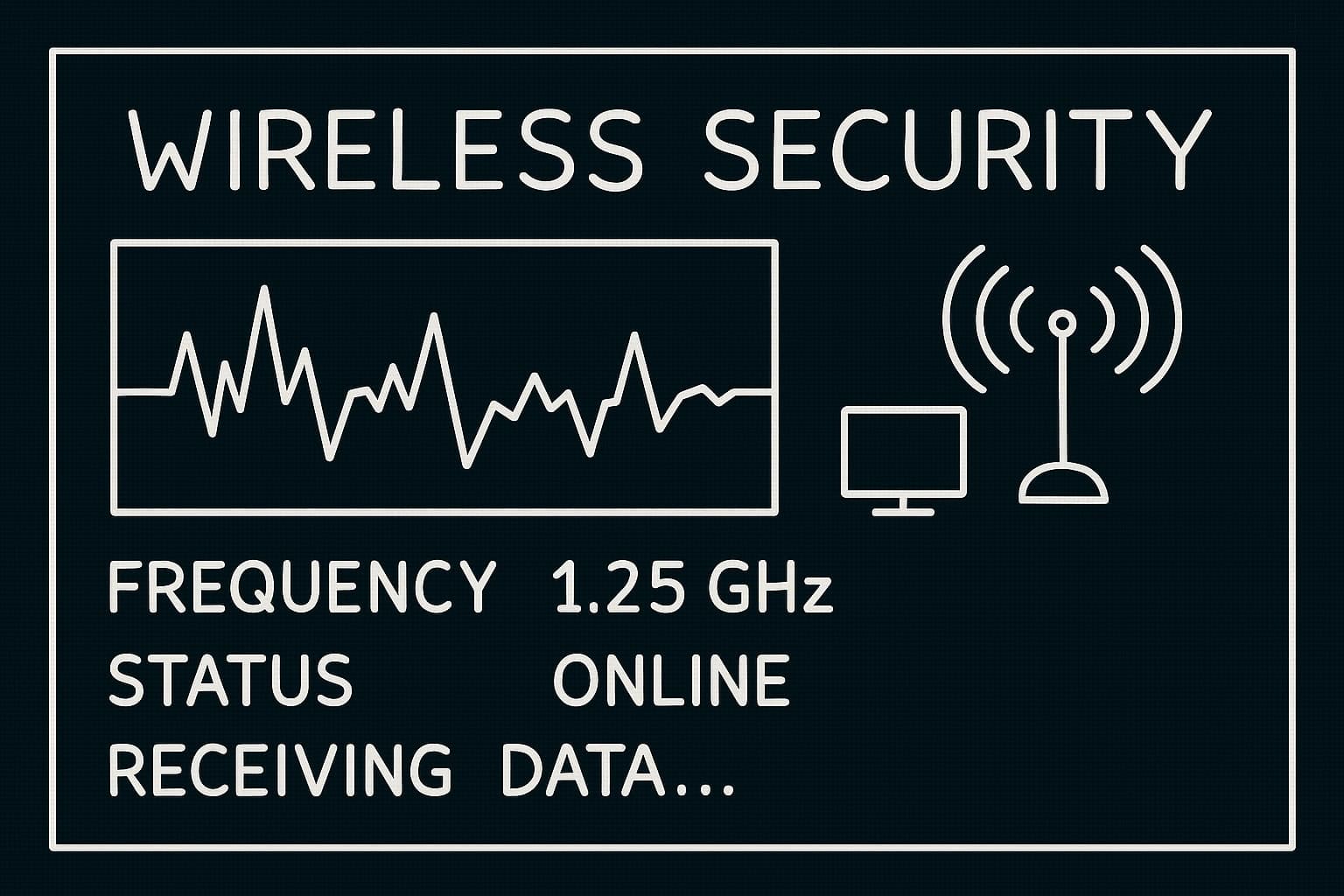
The Wireless Security Scanner is a software-defined radio (SDR) application written in C++ that detects, identifies, and analyzes wireless protocols in real time. It processes raw RF signals to produce spectrograms and frequency analysis, helping identify potential security vulnerabilities in wireless communications.
Motivation
Wireless networks are everywhere, yet most security analysis tools operate at the protocol level — they assume you already know what you're looking at. This project takes a different approach by working at the signal level, using SDR to capture raw radio frequency data and applying digital signal processing techniques to identify and characterize wireless transmissions from the ground up.
Signal Processing Pipeline
The application processes RF data through several stages:
- Capture — Raw IQ samples from the SDR hardware are buffered for processing
- FFT Analysis — Fast Fourier Transform converts time-domain samples into frequency-domain representations
- Spectrogram Generation — Sequential FFT frames are assembled into a visual spectrogram showing signal activity over time
- Protocol Detection — Frequency patterns, bandwidth, and modulation characteristics are matched against known protocol signatures
- Security Analysis — Detected protocols are evaluated for known vulnerabilities and misconfigurations
Technical Implementation
- Language: C++ for performance-critical signal processing
- FFT Engine: Custom-optimized FFT implementation for real-time processing
- Visualization: Real-time spectrogram rendering with configurable frequency range and resolution
- Protocol Database: Extensible signature database for Wi-Fi, Bluetooth, Zigbee, and other common protocols
Key Features
- Real-time spectrogram display of the RF environment
- Automatic protocol identification based on signal characteristics
- Frequency scanning across configurable ranges
- Signal strength monitoring with historical tracking
- Security assessment of detected wireless networks
Challenges
Working at the signal level introduces significant complexity. RF noise, multipath interference, and overlapping transmissions all complicate protocol detection. Tuning the FFT parameters (window size, overlap, windowing function) to balance frequency resolution against time resolution required extensive experimentation.
What I Learned
This project gave me hands-on experience with digital signal processing concepts that are usually confined to textbooks. Understanding how wireless protocols manifest at the physical layer provides a perspective on wireless security that higher-level tools simply cannot offer.