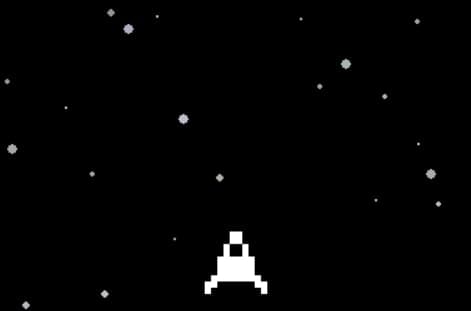
Overview
Tomo is a Space Invaders-inspired game with a twist: the codebase itself evolves between levels, powered by a large language model. Each level introduces new game mechanics, enemy behaviors, and challenges that didn't exist in the previous level — all generated and integrated by an LLM at runtime.
Motivation
Most games ship with a fixed set of mechanics. What if a game could surprise you every time you played? Tomo explores this idea by using LLMs not as a narrative tool, but as a game design tool — one that can write and inject new gameplay code on the fly. The result is a game where no two playthroughs follow the same mechanical progression.
How It Works
The game loop operates in two phases:
Play Phase
The current level plays like a classic space invaders game — the player controls a ship, dodges projectiles, and defeats waves of enemies. The core engine handles rendering, collision detection, and input processing.
Evolution Phase
Between levels, the LLM analyzes the current game state and generates new Python code that introduces novel mechanics. This might include:
- New enemy types with unique movement patterns
- Modified projectile behaviors (homing, splitting, etc.)
- Environmental hazards or power-ups
- Changes to the scoring system or win conditions
The generated code is validated and sandboxed before being integrated into the running game.
Technical Details
- Engine: Custom Python game engine built with Pygame
- LLM Integration: Code generation with structured output for reliable mechanical integration
- Sandboxing: Generated code runs in a restricted environment to prevent breaking the core engine
- State Management: Game state is serialized between levels for the LLM to reason about
Challenges
The hardest part was ensuring that LLM-generated code would integrate cleanly with the existing engine. Generated mechanics need to use the right APIs, respect the coordinate system, and not conflict with existing behaviors. Designing a sufficiently structured yet flexible interface for code injection was the core engineering challenge.
What I Learned
Tomo pushed me to think about code as data — something that can be generated, validated, and composed dynamically. It also revealed fascinating insights about what LLMs understand (and don't understand) about game design when forced to express ideas as executable code.